
We Bring Your Ideas to Life—Solutions for High-Precision Customized Hardware Plastic Parts.

Precise Custom Machining, From Prototyping To Production

FUTURE PRECISION., established in 2018 and headquartered in Dongguan, China, is a leading manufacturer specializing in precision CNC machining, rapid prototyping, surface finishing, 3D printing, and die casting services. With CNC machining capabilities offering precision up to ±0.005 mm, the company excels in high-mix, low-volume, and custom part production—especially for applications that demand tight tolerances. Dong Guan Future Precision Co., Ltd serves a wide range of industries, including: automotive, medical devices aerospace, robotics, consumer electronics, industrial automation etc.  Although the company was officially founded in 2018, its core team brings over 15 years of industry experience. 

Backed by advanced technology and ISO 9001:2015 certification, our skilled team consistently delivers comprehensive and reliable manufacturing solutions to clients around the globe.

PROCESSING SERVICES

Whether you need high-precision parts, rapid prototypes, or durable surface coatings, we deliver exceptional quality and efficiency from design to finished product using advanced technology and expert craftsmanship.

CNC MACHINING

Experience the same unmatched speed, precision, and reliability in machining at FUTURE PRECISION—where advanced capabilities meet tight tolerances and competitive volume pricing.

RAPID TOOLING

We design and fabricate precision mold tooling to manufacture high-quality products with unmatched accuracy

DIE CASTING

Die casting is a high-pressure metal casting process where molten metal is forced into a precision mold cavity, producing strong, dimensionally accurate parts.

SURFACE FINISH

We offer a range of CNC surface finishes: high-gloss polished, smooth matte, or custom textures (e.g., bead-blasted, brushed, or patterned) to meet functional or aesthetic requirements.

3D PRINTING

Seven advanced additive manufacturing technologies for cost-effective prototyping and precision production parts.

SHEET METAL

We specialize in precision cutting, bending, and assembling of metal sheets to deliver high-quality custom metal parts.

CNC MACHINING PARTS

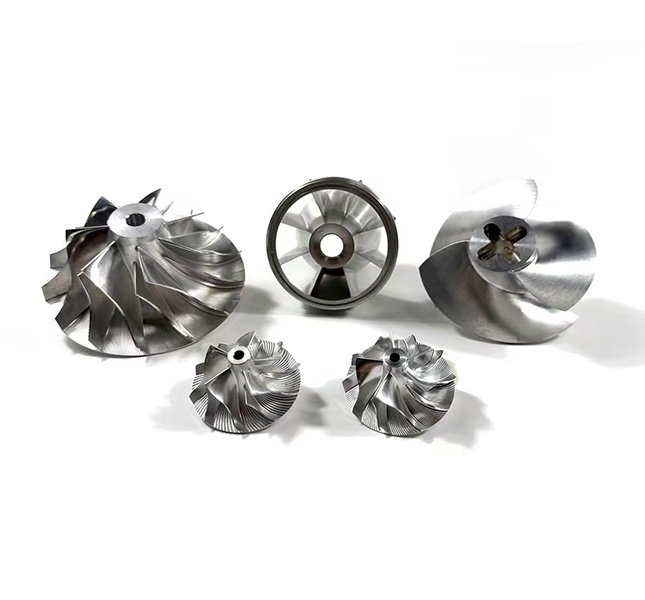
Precise Turbomachinery CNC parts

Turbine machining is a crucial process in the manufacturing of turbocharger components. At FUTURE PRECISION, we utilize state-of-the-art CNC machines to deliver high-precision machining for a wide range of turbo parts, including: compressor housings, turbine housings, bearing housings, compressor wheel impellers, turbine shaft wheels, propellers and impellers, double-blade compressor wheels, titanium blank compressor wheels, back plates and seal plates. Our company's advanced capabilities ensure the accuracy, performance, and durability required for high-speed, high-temperature turbocharger applications.
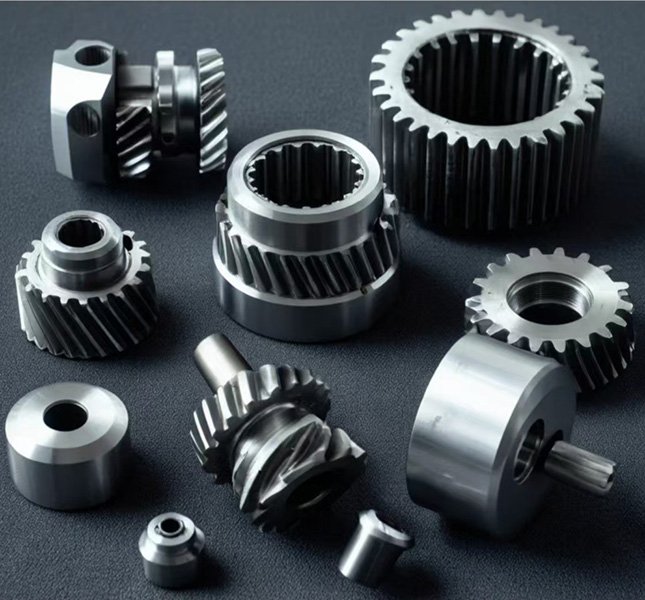
Automotive CNC parts

CNC machining plays a vital role in the production of complex structural components across industries such as aerospace, medical, and automotive. Components like turbine blades, orthopedic implants, engine blocks, and high-precision molds often feature intricate geometries, tight dimensional tolerances, and are manufactured from materials like titanium alloys, stainless steel, and fiber-reinforced composites.Equipped with multi-axis CNC technology, manufacturers can precisely machine 3D contoured surfaces, deep cavities, and fine features, enabling the creation of parts that meet the demanding performance and quality standards of modern engineering applications.

Complex CNC parts

CNC machining is extensively used across a wide range of industries to manufacture highly complex structural components. Applications include aerospace turbine blades, medical implants, automotive engine blocks, and precision molds—all of which demand intricate geometries, tight tolerances, and the use of advanced materials such as titanium, stainless steel & composites. With the support of multi-axis CNC systems, manufacturers can achieve high-precision fabrication of curved surfaces, deep cavities, undercuts, and other challenging features that would be difficult or impossible to produce using conventional methods.

Miscellaneous CNC parts

We specialize in the precision machining of complex components across the automotive and turbocharger sectors. Our capabilities include the manufacturing of: steering knuckles, cast iron and steel transmission pinions, chuck components, involute spline shafts, hydraulic cylinders, pump parts, including aluminum pump housings and covers. We also offer deep expertise in machining turbocharger components, such as: compressor housings, steering housings, turbine housings, turbine wheels, compressor starter wreaths, automotive engine parts, impellers and spiral components. Our advanced CNC capabilities ensure tight tolerances, consistent quality, and high-performance results for even the most demanding applications.

NON-TRADITIONAL MACHINING

Laser Beam Machining (LBM)

LBM is the hermal-based manufacturing process that uses a high-energy coherent laser beam to cut, drill, weld, engrave, or surface-treat materials with extreme precision A focused laser beam is directed onto the workpiece. The intense heat (up to 100,000°C) vaporizes or melts the material in the beam path, while the assist gases (e.g., oxygen, nitrogen) blow away molten debris for clean cuts.

Electrical Discharge Machining (EDM)

EDM is a non-traditional machining process that uses controlled electrical sparks (discharges) to erode conductive materials with high precision. Unlike conventional cutting tools, EDM requires no physical contact, making it ideal for hard metals and complex geometries.

Ultrasonic Machining (USM)

USM is also a non-traditional, mechanical-type machining process that uses high-frequency vibrations and abrasive slurry to erode hard, brittle materials. Unlike thermal processes like EDM or laser machining, USM is ideal for electrically non-conductive materials (e.g., ceramics, glass) and delicate parts.

FREQUENTLY ASKED QUESTIONS FROM CUSTOMERS

🛒 Before You Place an Order
Q: How can I request a quote?
A: To request a quote, simply upload your 3D CAD model on our website. Please include the following information to ensure an accurate quote:
✓3D/2D Drawings (3D preferred for precise pricing)
✓Material
✓Manufacturing Process
✓Post-Treatment (e.g., “as machined” if none required)
If you’re unsure about any of these details, you can refer to our guide on how to choose the right material and process. Once we receive all required information, you’ll receive an interactive quote within hours. If we identify any issues with your design, our engineers will highlight them and suggest solutions.

Q: What file formats does FUTURE PRECISION Hardware accept for quoting?
A: We accept 3D CAD files in STP, STEP, PRT, or IGS formats. If you’re submitting 2D drawings with reference dimensions, please send them in PDF format. Complete technical documentation is required for accurate quoting.

Q: Can FUTURE PRECISION Hardware help with design drawings?
A: In most cases, we do not offer design drawing services. Customers are expected to submit their own 2D and 3D CAD files. Once an order is placed, we can provide manufacturing-ready drawings upon request.
Exception: We can assist with reverse engineering for face mask embossing rollers after the order is confirmed, provided it does not infringe any copyrights.

Q: Will my design remain confidential?
A: Absolutely. We are happy to sign a Non-Disclosure Agreement (NDA) upon request. Internally, we enforce a strict no-photography policy, and we have a long-standing reputation for safeguarding client IP. Your proprietary information will never be shared with third parties.

Q: Can I provide my own materials for production?
A: Yes, you may supply your own material as long as it is compatible with our equipment and processes.

Q: Can I use my own master model for vacuum casting or CNC machining?
A: Yes. For vacuum casting, we can use a master model made from any heat-resistant rigid material (up to 100°C). For CNC machining, the master will be 3D scanned to generate a CAD/CAM program. Please take care when packaging and shipping your master models.

Q: Can I order just one piece?
A: Yes, we have no minimum order quantity. Whether it’s a single prototype or a full production run, we’ll recommend the most cost-effective solution based on your project needs.

Q: How long does it take to receive a quote?
A: For most rapid prototyping projects, you can expect a quote within a few hours. In any case, we’ll provide your quotation within one working day. If there’s a delay, we’ll notify you promptly.

Q: How does FUTURE PRECISION Hardware’s pricing compare to other suppliers?
A: Compared to suppliers in North America or Europe, our prices are typically 25–45% lower for plastic injection molds and CNC machined parts. While we may not always offer the lowest prices compared to other Chinese manufacturers, we prioritize quality, service, responsiveness, and professionalism.

Q: Are lead times based on working or calendar days?
A: Lead times are quoted in working days, beginning only after DFM (Design for Manufacturing) approval and confirmation of the production start date, per our Terms and Conditions.

Q: How fast can I receive my parts?
A: If we receive complete 2D and 3D files, production can begin immediately, and parts may be ready in as little as 2 weeks. Lead times depend on complexity. For faster turnaround and accurate timing, please request a quote.
We typically ship by air freight, with delivery in a few days to most regions.

Q: What are the estimated shipping times?
A: Standard delivery times (by air freight):
Europe: 3–4 working days
North America: 4–5 working days
Australia: 3–4 working days
South America: 5–7 working days
Middle East & North Africa: 5–7 working days
Japan: 1–3 working days (next-day delivery is often possible)
Please note: Delivery times may vary due to unforeseen circumstances such as seasonal demand spikes, customs delays, pandemics, or other force majeure events.
Q: When should I choose CNC Machining Services?
A: CNC machining is ideal when you need functional parts made from real engineering-grade materials. It’s especially suitable for low-volume production (1–200 pieces) with fast turnaround times of 1–3 business days. CNC machining is more expensive than plastic 3D printing but is the most viable solution for metal prototypes, particularly when metal 3D printing or casting is too costly. It’s also the best choice when you need precise, strong parts for functional testing or end-use applications.

Q: When should I choose 3D Printing Services?
A: 3D printing is perfect for rapid, cost-effective prototyping—from single units to medium quantities. It is commonly used for one-off visual models thanks to its speed and affordability. While 3D printed parts may lack the strength or impact resistance of machined parts, they are often sufficient for form and fit validation, concept demonstrations, and early-stage product development.

Q: When should I choose Vacuum Casting Services?
A: Vacuum casting is an excellent choice for producing high-quality prototypes or small batches using cost-effective silicone molds. The process offers exceptional surface detail and replicates the master model with high fidelity, making it suitable for pre-production runs and visual or functional prototypes.

Q: When should I choose CNC Machining over Injection Molding?
A: CNC machining is ideal for functional testing, prototyping, or producing low volumes before investing in injection mold tooling. It’s also perfect for test fixtures or assembly jigs. Unlike traditional machine shops that charge high non-recurring engineering (NRE) fees, we use automated CNC machining that eliminates upfront NRE costs, making small quantities affordable—even as low as one part.
Injection molding becomes more cost-effective when you need larger sample quantities, bridge tooling, or low-volume production (up to 10,000+ parts). We can deliver molded parts in just 1 to 15 days, far faster than the typical 6–10 weeks required by traditional molders.

Q: What tolerances can FUTURE PRECISION Hardware achieve?
A: Tolerances vary depending on part size, geometry, material, surface finish, and the process used. After order confirmation, we conduct a Design for Manufacturing (DFM) review and highlight any potential tolerance limitations. Please identify critical tolerance areas in your design for best results. General guidelines include:
✓CNC machining (metal/plastic): Industry standard
✓Plastic injection molding: Industry standard
✓Metal 3D printing: ±0.5mm
✓Vacuum casting: ±0.15% shrinkage
All specifications must be clearly defined in the 2D drawings to be followed accurately.

Q: How does FUTURE PRECISION Hardware ensure quality?
A: We take quality seriously at every step:
✓DFM review conducted by engineers after order confirmation
✓Raw material inspection using advanced testing equipment
✓Final inspection reports are generated before shipment
✓Real-time inspection data can be shared with you to address quality issues promptly

Q: What surface finishes are available?
A: We offer a wide range of finishing options to match your product’s desired appearance and performance, including:
✓Metal surface treatments
✓Plastic mold texturing
✓Painting for plastic and metal
✓Specialized coatings and textures
Visit our blog to learn how to specify your surface texture effectively.

Q: Can you produce optical-quality plastic parts?
A: Yes. We use advanced 3-axis to 5-axis CNC milling and Single Point Diamond Turning (SPDT) technology to achieve ultra-precision machining for optical components like lenses and light guides. With extensive polishing expertise, we ensure exceptional clarity and smooth finishes for both internal and external surfaces—ideal for optical prototyping.

Q: What is the typical mold life for silicone molds?
A: Mold life depends on the complexity of the part:
✓Simple parts: Up to 20 castings per mold
✓Clear or complex parts: 10–12 castings per mold
✓Degradation increases with high detail or optical clarity requirements.

Q: Why is a high-quality master pattern important?
A: The master pattern directly determines the quality of your casting parts. For high-tolerance, glossy, or optically clear parts, we machine the master using high-precision CNC equipment and apply surface treatments such as painting or satin texturing. The silicone mold copies every detail from the master, so a well-made master eliminates the need for additional finishing.

Q: Is CNC machining performed in-house at FUTURE PRECISION Hardware?
A: Yes. All CNC machining is handled in-house at our own facilities, with over 80 CNC machines (3–5 axis), and more than 200 total machines for 3D printing, vacuum casting, injection molding, and sheet metal. This enables complete production control, better quality assurance, and direct pricing from the manufacturer—with no middleman markups.
Q: Does FUTURE PRECISION Hardware insure delivered goods?
A: No, we do not provide insurance for shipments by default. However, you are welcome to arrange your own insurance coverage if required.

Q: How much import duty will I need to pay for my goods?
A: Import duties vary by country and product type. Most countries follow the international Harmonized System (HS) codes to classify trade goods. For example, customers in Australia may benefit from duty-free imports under the CHAFTA agreement. Please consult your local customs office for the most accurate duty estimate.

Q: What are FUTURE PRECISION Hardware’s standard shipping terms?
A:For prototyping and regular production orders, our default shipping term is Ex Works (EXW), meaning customers handle all logistics, duties, and customs once goods leave our facility.
For express shipments, we use Delivered Duty Unpaid (DDU), which means the buyer is responsible for paying import duties and taxes upon arrival.

Q: Does FUTURE PRECISION Hardware provide export molds?
A: Yes, we do provide export molds. However, please note that our tooling is built to fit Modular Unit Dies (MUD) bases, which are standardized in size. Customers must ensure compatibility with their own molding systems before ordering.

Q: What if I’m not fully satisfied with the parts I receive?
A: We stand behind the materials and workmanship based on your approved specifications. If any issues arise, please contact our management team. We are committed to resolving problems in good faith and ensuring your satisfaction. Our long-term success depends on building and maintaining customer trust.

Q: Can my company get credit terms with FUTURE PRECISION Hardware?
A:New rapid prototyping customers must pay in advance for their first three orders. After that, we may offer 30-day credit terms, subject to review. Tooling orders generally require a 50% deposit, with the balance due upon T1 sample approval, unless otherwise agreed.

Q: How can I pay FUTURE PRECISION Hardware?
A: We accept bank-to-bank wire transfers. Payments can be sent to our accounts in Hong Kong or Dongguan, China. Bank details will be provided on the invoice.

Q: What if I am not completely satisfied with the quality of the parts I receive?
A: We stand behind the quality of our materials and manufacturing processes, in accordance with the terms of your original order and the specifications you provide. Every part undergoes strict inspection and quality control by our engineers and QC team before shipment.
If any issues arise—especially those based on subjective judgment—please contact our management team directly. We are committed to acting in good faith to resolve any concerns and ensure your complete satisfaction. Our ongoing success depends on earning and maintaining your trust through consistent quality and service.
rapid prototype product development